
Negative cut goalkeeper gloves
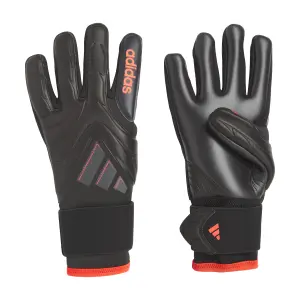
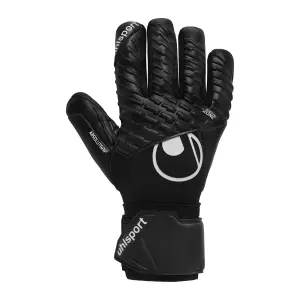

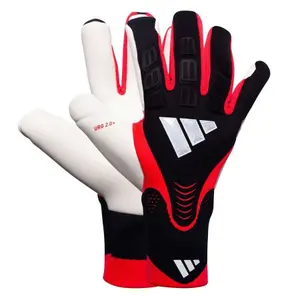
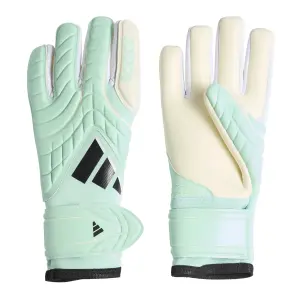
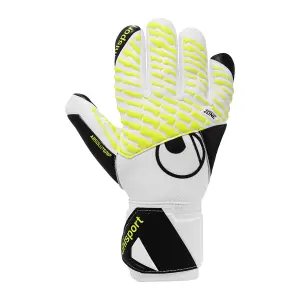

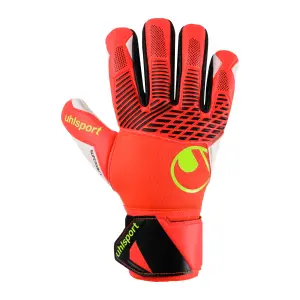


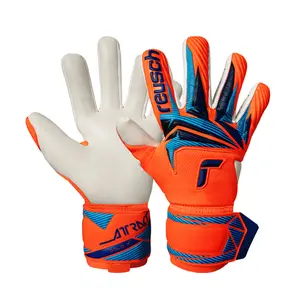
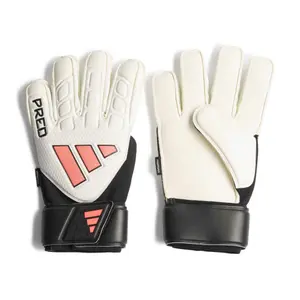
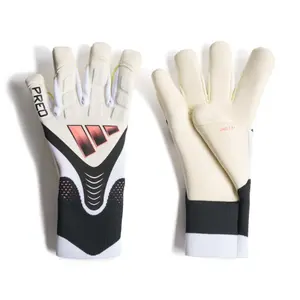
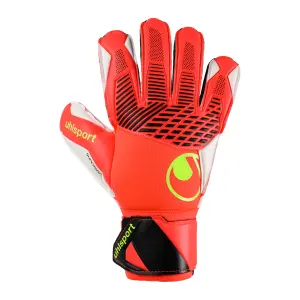


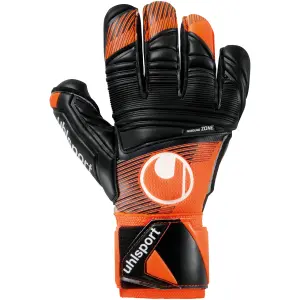


The goalkeeper gloves with negative seams hide their seams inside: the latex fits the fingers without excess material, for a precise ball touch. adidas applies this to its Predator Pro and Copa Pro, Reusch to the Attrakt with its Evolution Negative Cut, and Uhlsport offers it in Half Negative, more comfortable thanks to inserts.
A glove that sticks to your hand like a second skin
How Internal Seams Change Ball Handling
On a negative cut, the parts of the glove are sewn inside out and then turned back: the seams end up on the inside. Therefore, there are neither bulges nor excess fabric between your fingers and the ball, and the latex closely follows the shape of your hand. The goalkeeper feels the trajectory better when blocking and maintains control over hand throws.
This precision comes at a cost: the glove fits tighter, leaving less room for wider hands and may feel stiff if the size is too snug once the hands are warm. The internal seams also stretch the latex, which sometimes wears out a bit faster than on a flat cut.
Comparing with Other Glove Cuts
If the negative cut feels too tight, Hybrid Seams maintain a precise fit while adding latex on the sides of the fingers. Flat Seams provide more space for the hand, and Rollfinger wraps the foam around each finger. To protect your fingers from turning, check out the Finger Save page, and find the complete overview on Types of Gloves.
adidas, Reusch, Uhlsport: three ways to do a negative cut
At adidas, the Predator Pro and the Copa Pro feature a palm made of URG 2.0 latex and a tight negative cut along the length of the fingers. The Copa Pro is distinguished by its latex backhand, while the Predator Pro has a mesh back with silicone elements. Child versions are available for both.
Reusch uses its Attrakt in Evolution Negative Cut, a cut that the brand describes as precise and fitted. Finally, Uhlsport softens the formula with its Half Negative, identifiable by the HN emblem: internal seams for support, inserts between palm and back for comfort, on foams like Supersoft, designed for daily training.
Choosing the Right Size in Negative Cut
A negative cut is less forgiving of sizing errors than a flat cut. Measure the circumference of your hand below the fingers, excluding the thumb, and refer to the brand's size chart. If your measurement falls between two sizes, go for the larger one: the cut is already tight by design.
When trying it on, make a fist and then open your hand wide. The glove should follow the movement without pulling on the back of the fingers, and the tips of your fingers should not hit the end. A slight feeling of a second skin is normal, but a compression that numbs is not.
Key Moments for Discounted Negative Cut
High-end negative cut gloves mainly see reductions during major sales events. Black Friday and the holiday season come first, followed by winter sales. In spring, the French Days have their Goalkeeper Gloves page for the French Days. Summer sales and the return of training feed the Promotions page, and clearance items are on the Clearance page.
Frequently Asked Questions
Is the negative cut suitable for wide hands?
It's the least forgiving cut for wide hands, as it is naturally tight. If it's important to you, try a Half Negative from Uhlsport, which is more comfortable thanks to its inserts, or go up half a size if the brand allows it.
Is a negative cut glove suitable for a child?
Yes, adidas and Uhlsport offer them in children's sizes. Since the cut is fitted, measure their hand at the time of purchase and avoid going larger for growth: a floating glove loses the precision you're after.
Does a negative glove stretch over time?
A little. The inner textile and latex soften over the first few sessions, making the glove more comfortable. But it won't gain a size: don’t rely on this break-in to fix a model that's too small.
Can you have a negative cut with finger protection?
Yes. adidas offers, for example, Fingersave versions of some negative cut models, with ribs that prevent fingers from bending backward. The ribs take up some space, so check the fit when trying them on.
What does HN mean on a Uhlsport glove?
HN stands for Half Negative. The seams remain internal for a snug fit, but inserts connect the palm to the back of the glove. The result is more comfortable than a classic negative, with a close ball feel.