
Classic flat cut goalkeeper gloves

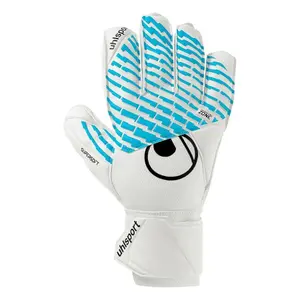
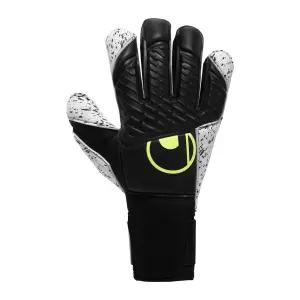


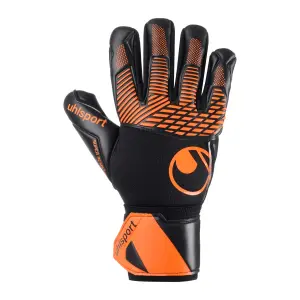


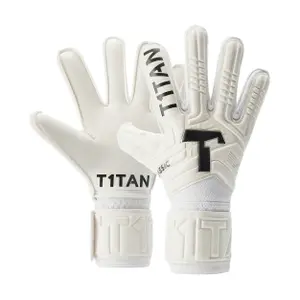


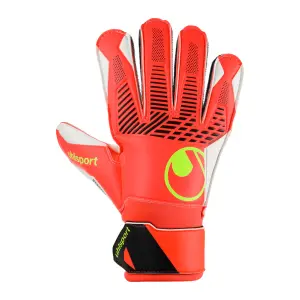
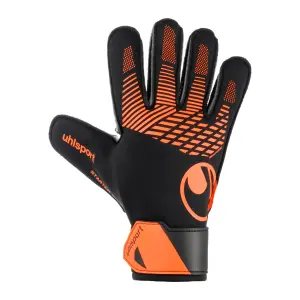
The flat seam goalkeeper gloves, known as classic cut, combine the palm and the back of the hand with inserts and visible seams on the outside. The glove fits wider, allows the hand to breathe, and tolerates an approximate size. Uhlsport notably uses it on their Soft Resist+ and Starter Resist+, designed for synthetic use.
The classic cut, comfortable and robust
What a flat cut changes in hand
The flat cut is the oldest type of goalkeeper glove construction. The latex palm forms a flat piece, attached to the back of the hand by inserts on the sides of the fingers, and the seams remain on the outside. The result: a glove that is roomier, where the fingers are never cramped.
This freedom has several advantages. The hand breathes better, the glove slips on easily, and it accommodates a wide hand or thick fingers. On the flip side, the sides of the fingers are made of fabric and not latex, and the feel of the ball is less direct than with a negative cut or a rollfinger.
Other cuts to compare
If you’re looking for a glove that fits closer to the fingers, negative seam models eliminate any excess material. Hybrid seams add latex on the edge of the fingers, and the Rollfinger wraps foam around their entire length. Gloves with protection strips are gathered on Finger Save, and all the cuts can be compared from Types of Gloves.
Soft Resist+ and Starter Resist+, the flat cut from Uhlsport for synthetic surfaces
Uhlsport reserves its Resist series for synthetic pitches and hard ground, with foams designed to resist abrasion. The Soft Resist+ combines an exclusive Soft Resist latex with a classic cut: a glove that is robust yet maintains a good grip. There’s also a Flex Frame version, featuring a frame that stabilizes the four fingers, excluding the thumb, without hindering handling.
The Starter Resist+ takes durability further: it’s the glove in the series that stands up best to abrasion, aimed at beginner goalkeepers. The Soft Resist+ also comes in child sizes, for young players training several times a week on synthetic surfaces.
For which goalkeeper is the flat cut most suitable?
The flat cut is primarily suitable for beginner goalkeepers: its comfort and tolerance allow time to work on catching technique without struggling with a glove that’s too tight. It also reassures parents, as a rapidly growing hand remains comfortable a bit longer.
It is also popular with goalkeepers with wide hands and those training often on synthetic surfaces, where a durable latex is more important than the finesse of feel. Many experienced goalkeepers keep a pair for training sessions during the week, reserving their fitted glove for matches.
Save on your next pair with a classic cut
A flat cut is often the choice for a training pair: it’s best to buy it at the right time. Black Friday and the end-of-year holidays kick off the discount season, followed by winter sales. In spring, the French Days gather their offers on Goalkeeper Gloves from the French Days. The summer sales and the start of training sessions feed the Promotions page, and the last sizes go to Clearance.
Frequently asked questions
Does the flat cut offer less grip than a negative cut?
The grip mainly depends on the latex, not the cut. The difference lies in the feel: the flat cut leaves more space around the fingers, thus a slightly less direct touch, but the palm grips just as well with the same latex.
Why is the flat cut recommended for beginners?
Because it is comfortable, forgiving in size, and often paired with durable latex. A young goalkeeper can thus focus on catching and diving technique without being hindered by a glove that compresses the hand.
Can you play a match with a glove with flat seams?
Of course. The flat cut isn’t just for training: many goalkeepers prefer it in matches for its comfort and ease. Just choose a softer latex if you’re playing on natural grass.
Is a glove with a flat cut suitable for a child?
Yes, it’s actually a very common cut among young goalkeepers. The child version of the Soft Resist+ from Uhlsport features this construction, with durable latex and sizes suitable for small hands.
How can I reduce latex wear on synthetic surfaces?
Choose a latex designed for abrasion, like the Resist series from Uhlsport. Rinse the palm with lukewarm water after each session, don’t rub it, and let it air dry, away from sunlight and radiators.