
Football Puma balls for play and training

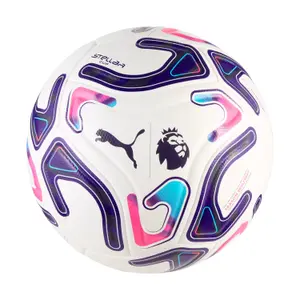

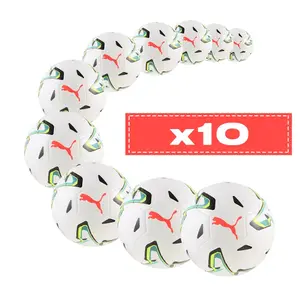
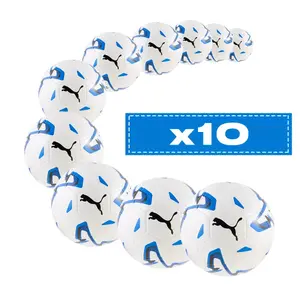
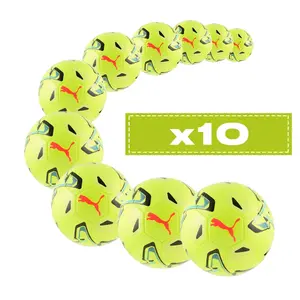
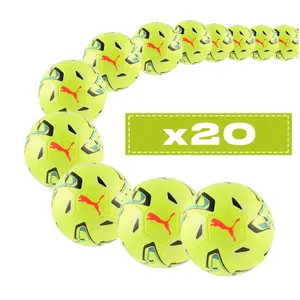
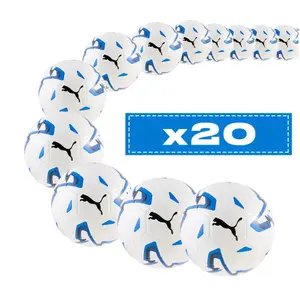
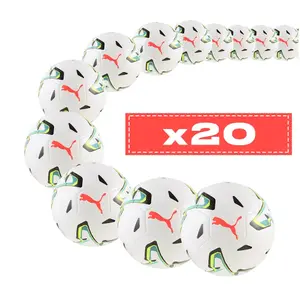
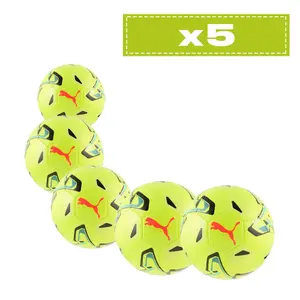
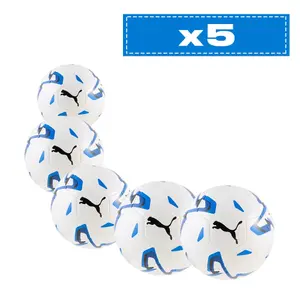
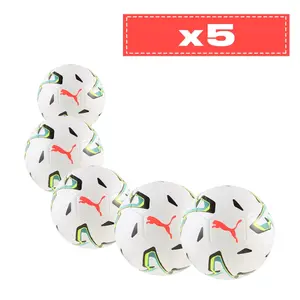
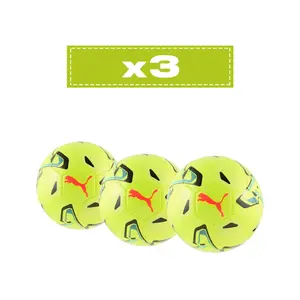
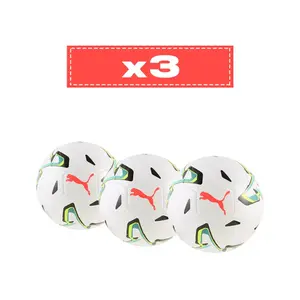
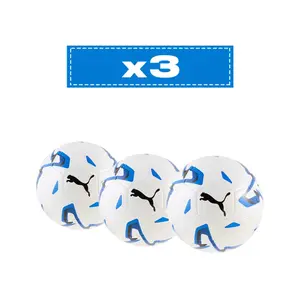
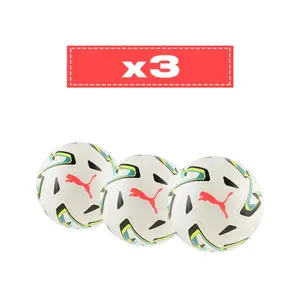
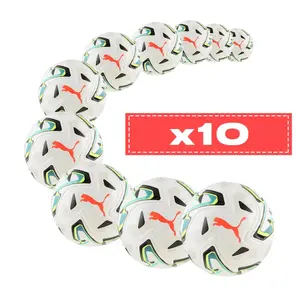
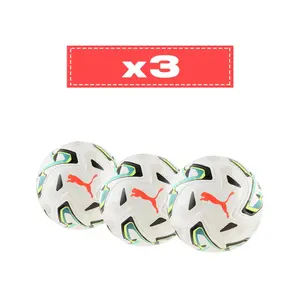
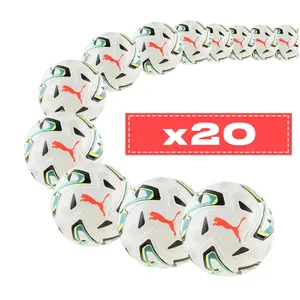
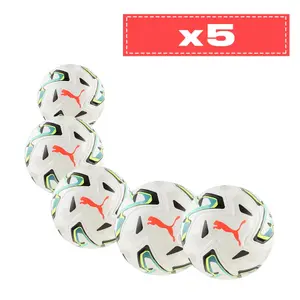

Puma has been providing the official ball for LaLiga since 2019, for Serie A since 2022, and, from the summer of 2025, for the Premier League. Our football balls Puma bring this expertise to your backyard and training sessions, featuring the Prestige, a training ball stitched from thirty-two panels with a retro look, available in sizes 3, 4, and 5.
The ball of the major championships, field version.
The Puma Prestige ball, a retro training model
The Puma Prestige features the classic design of a football: thirty-two panels, stitched together by machine for a smooth surface and a solid touch. Its glossy TPU finish, a thermoplastic polyurethane, protects the outer layer from moisture and wear on both synthetic and stabilised surfaces.
Its design takes inspiration from old-fashioned balls, with a simple graphic that sets it apart from more technical match models. Made for solo training, casual kickabouts with friends, or club workshops, it withstands repeated strikes without losing its shape, as long as the pressure indicated near the valve is maintained.
Other football brands
All models are gathered on the football balls page, across all brands. The adidas balls continue the tradition of World Cup balls, the Uhlsport balls focus on durability appreciated by clubs, and the Erima balls are aimed at collective training and sets for teams.
Puma and the official balls of major European leagues
Puma has established itself as a major supplier of league balls. The feline brand has been supplying LaLiga since the 2019-2020 season and extended the agreement until the end of the 2028-2029 season. In Italy, it took over from the historic Serie A supplier in 2022, unveiling a model called Orbita that June.
The biggest contract came in the summer of 2025: Puma became only the third supplier of the Premier League ball since the league's inception in 1992. This match ball features twelve equal-sized panels and wider, deeper seams designed to stabilise its trajectory. A training ball doesn't have these specifications, but benefits from this expertise.
Size 3, 4 or 5: which Puma ball for the player's age
The size of the ball corresponds to the player's age. The size 3, measuring 58 to 61 centimetres in circumference, is suitable for young players up to about 8 years old. The size 4, between 63.5 and 66 centimetres, is for footballers aged 8 to 12, from U9 to U13. The size 5, measuring 68 to 70 centimetres and weighing 410 to 450 grams, is the official size for teenagers aged 13 and up, as well as adults.
A ball that's too big for a child can strain the ankle and affect the accuracy of their skills. On the other hand, an adult training with a size 4 works on ball control but loses their striking consistency. For versatile use at home, size 5 remains the standard from secondary school onwards.
The best times to buy a Puma ball
The ball is still a reliable gift. Think of Black Friday and the end-of-year holidays for a child starting out, then the winter sales, when equipment promotions also include balls. In spring, the French Days equipment sales come before the summer sales, and the return of training boosts demand. Discontinued colours go to clearance, and each order is prepared and shipped within 24 hours.
Frequently Asked Questions
What are the orange or yellow Puma balls for?
The orange and yellow colours, known for high visibility, are easier to spot on snowy pitches, in fog, or under low lighting. They are practical for winter training sessions in the late afternoon.
What pressure should I use in a Puma football?
The recommended pressure is printed near the valve, generally between 0.6 and 1.1 bar for a size 5 ball. Use a pump with a gauge and a moistened needle to avoid damaging the valve.
Does a machine-stitched ball hold up on synthetic pitches?
Yes, machine stitching combined with a TPU cover withstands synthetic and stabilised surfaces well. Just avoid everyday use on asphalt, which wears out the seams and surface much faster.
Is the Orbita ball the same in all leagues?
No, Orbita refers to a family of Puma balls tailored for each league, featuring graphics specific to LaLiga, Serie A, or the Premier League. The construction of match models also varies from one version to another.
How should I store a football to make it last?
Wipe it down after each session in the rain, let it dry at room temperature, away from a radiator, and store it slightly deflated if it won't be used for several weeks.