
Football balls for match and training


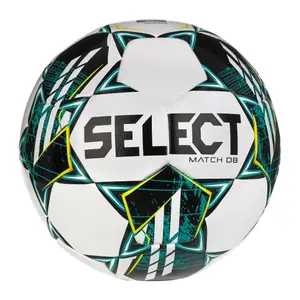

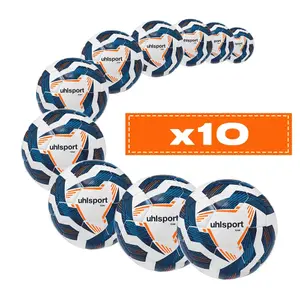
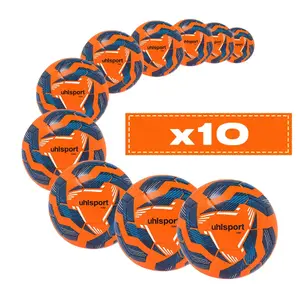
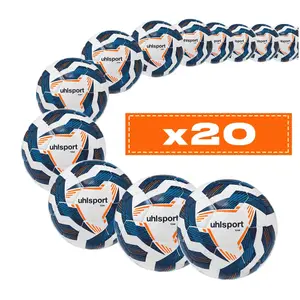
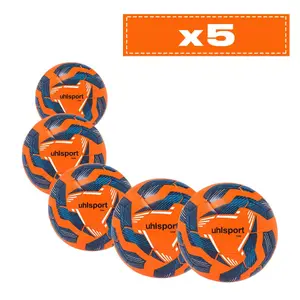
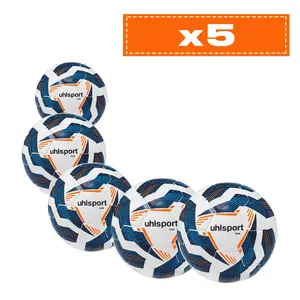
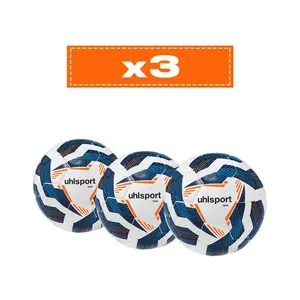
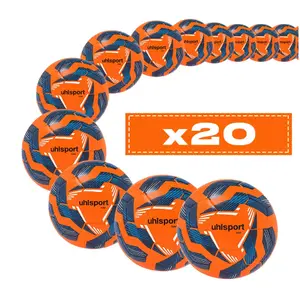
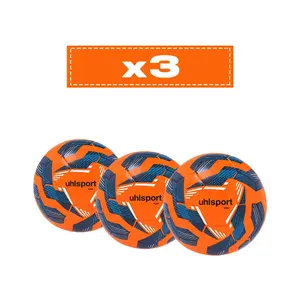


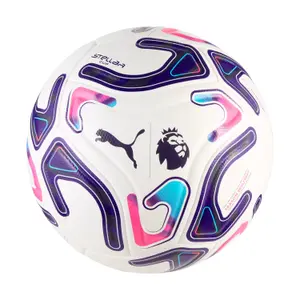

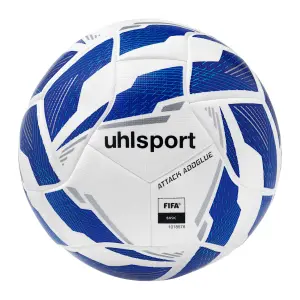


Size, construction, FIFA label: a ball should be chosen according to the player’s age and the use. Our selection of footballs ranges from the Club version of the Trionda by adidas, the ball for the 2026 World Cup, to the Puma Prestige for leisure, and even the elastic cord training ball from Pure2Improve for solo practice.
The right ball, in the right size.
What size football according to age
- Size 3: the ball for the youngest, used in France from U6 to U9, with a circumference of about fifty-seven to sixty centimetres and a weight close to three hundred grams.
- Size 4: the football for eight, from U10 to U13, slightly larger and heavier, to support growth.
- Size 5: the official ball from adolescence and for adults. Law 2 sets its circumference between sixty-eight and seventy centimetres, its weight between four hundred ten and four hundred fifty grams at kick-off, and its pressure between 0.6 and 1.1 atmospheres.
Choosing your ball by brand
Each brand has its own page. The adidas balls continue the lineage of World Cup balls, from the Telstar to the Trionda. The Puma balls cover both leisure and match play, the Erima balls are designed for intensive club use, and the Uhlsport balls complete the offering from the Balingen brand. Cones, hoops, and nets can be found in training equipment.
Machine stitched, thermally bonded or hybrid: how is a ball made
A machine stitched ball joins its panels with a strong seam: this is the construction for leisure and training balls. The Puma Prestige is an example, with its thirty-two panels made from shiny TPU, and the Club version of the Trionda combines a machine-stitched TPU cover with a butyl bladder, which holds air for a long time.
High-end match balls are thermally bonded: the panels are heat-welded, without seams, which limits water absorption and makes the flight path more consistent. This is the case for the Trionda in the Pro version, built with only four panels. Hybrid balls combine both techniques to find a balance between durability and feel.
FIFA Quality Pro, Quality or Basic: what do these labels guarantee
The FIFA quality programme subjects balls to seven laboratory tests: weight, circumference, sphericity, bounce, water absorption, pressure loss, and shape and size retention. The tests are much tougher than the conditions of a regular match, to ensure consistent performance throughout the game.
The FIFA Quality Pro label sets the strictest tolerances and is used in professional competitions. FIFA Quality and FIFA Basic guarantee a verified quality level for training and amateur matches. According to Law 2, matches in competitions organised by FIFA or the confederations require a ball that bears one of these labels.
Renewing the club or garden balls
A ball wears out quickly on synthetic or asphalt surfaces. The Black Friday and its equipment promotions make it possible to gift one for the holiday season, followed by winter sales to accompany the January return. In spring, the French Days collect equipment with the nice weather and park matches, before the summer sales and the resumption of training when clubs restock. Balls from past competitions join destocking, and each ball is prepared and shipped within 24 hours.
Training alone with an elastic cord ball
The Pure2Improve Soccer Ball Trainer connects the ball to an adjustable belt with an elastic cord. The ball returns to the player after each kick, avoiding ending up in the neighbour's garden: allowing for continuous control, passing, juggling, and shooting without a partner or net.
This type of accessory mainly serves to increase ball touches, the key to technical progress for young players. To get started, the Team Merchandise Signature set, which includes a ball, a pump, and a water bottle, provides everything needed to start kicking the ball right out of the box.
Frequently asked questions
At what pressure should a football be inflated?
The recommended value is printed near the valve, usually within the range set by Law 2, between 0.6 and 1.1 atmospheres. Moisten the needle before inserting it to avoid damaging the valve.
Is a size 5 ball suitable for a 10-year-old child?
No, it is too heavy and too big for a player of that age. In France, U10 to U13 play football with a four size ball, which is better suited to their foot size and kicking power.
Why does a ball lose air over the weeks?
All bladders allow a little air to escape. Latex offers a softer touch but deflates more quickly, while butyl retains pressure much longer: this means that it needs to be inflated less often.
What ball should I choose for playing on asphalt or a city pitch?
A machine stitched ball with a thick cover withstands abrasive surfaces better. A thermally bonded match ball would quickly get damaged on concrete: save it for natural or synthetic grass.
How can I make a football last longer?
Don't sit on it, clean it with clear water after a match in the rain, and let it dry away from a heat source. Store it slightly deflated if you won't be using it for several weeks.