
Children's football shoes Puma
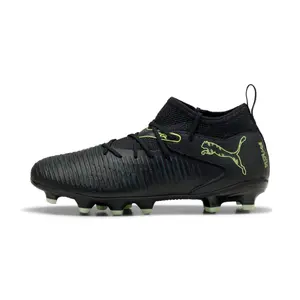
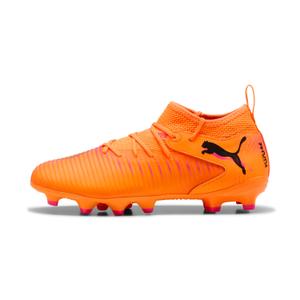
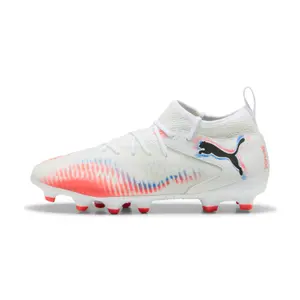
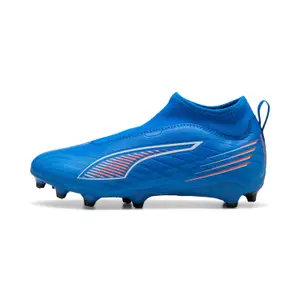
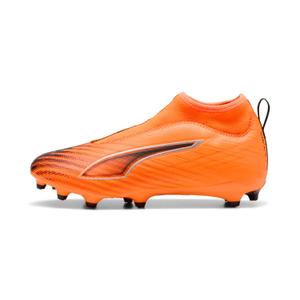
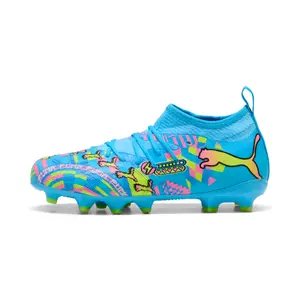
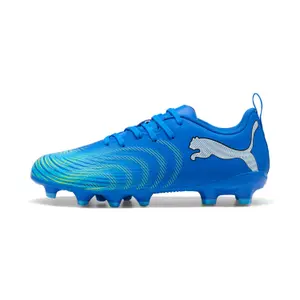
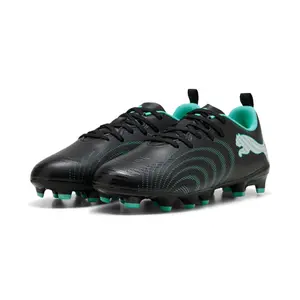
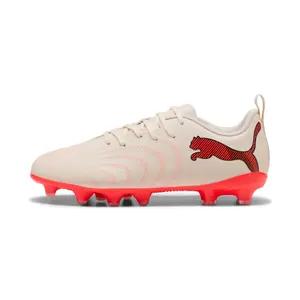


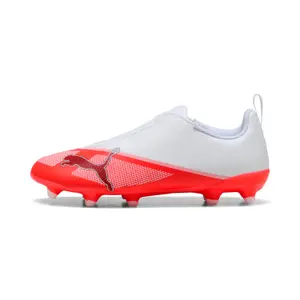
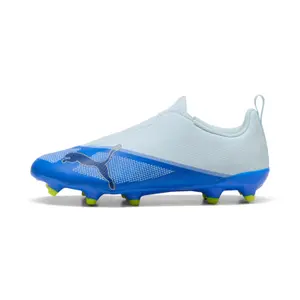
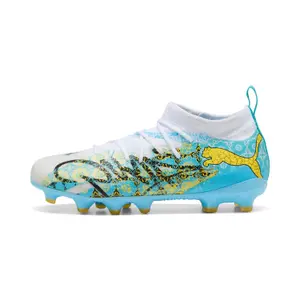

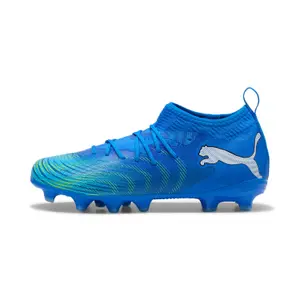
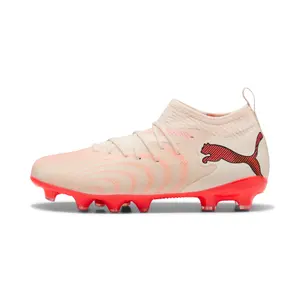
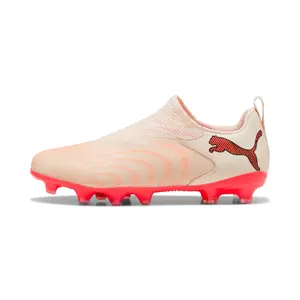
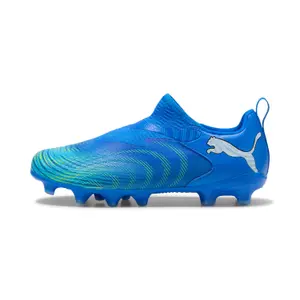
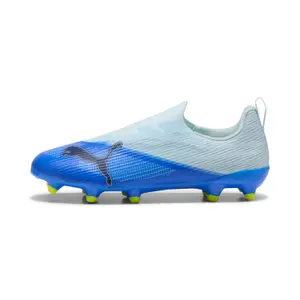
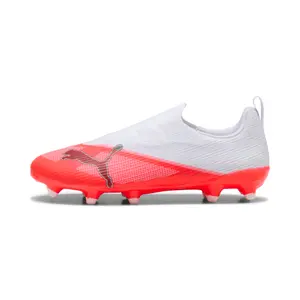


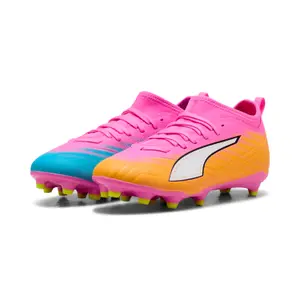


Children's football boots Puma come in two lines: the Future, for creative players, featuring an elastic support band, and the Ultra, for the fastest ones. Levels Play, Match or Pro, with laces, Velcro or laceless, FG/AG or indoor soles, all with vibrant colours that are the brand's feline signature.
Future or Ultra, everyone has their own game.
Future: an elastic band for creatives
Launched in 2017 with a Netfit lacing system, the Puma Future is aimed at playmakers and dribblers. Its signature feature today is the FUZIONFIT band, which wraps around the midfoot for a close fit like a slipper, even with light lacing.
In junior sizes, it comes in the robust and straightforward Play version, then the Match, and finally the Pro, which features the same sole as the adult models with studs positioned to aid rotations. A shoe designed for children who love to keep the ball, change direction and deliver the final pass.
Compare with other manufacturers
For comparison, the F50 Hyperfast and Predator in child sizes pit speed against striking, while the Morelia and Monarcida for young players offer the Japanese fit, and other kids' brands widen the choice. All junior sizes are gathered in the children's football shoes, and the Puma page showcases the Future and Ultra in adult sizes.
Ultra: lightweight for the fastest
Launched in 2020, the Ultra marked Puma's return to speed shoes, three years after the evoSPEED was discontinued. It focuses on a thin upper and a lightweight plate, inspired by track spikes, for acceleration and deep runs.
The junior versions carry this sleek profile, with an FG/AG sole that grips on both grass and synthetic surfaces, and some are laceless, featuring an elastic upper that hugs the foot. It suits children who play on the wings or in attack and seek primarily speed, provided they have a rather slim foot.
Play, Match or Pro: choose the right level Puma
Puma organizes its junior ranges by levels. The Play is suitable for beginners and children playing for fun, with a simple synthetic upper and a versatile plate. The Match offers more support and a more responsive sole, a good choice for a licensed child who trains every week. The Pro targets competitive juniors.
For younger kids, the Velcro versions, marked by the letter V, prevent laces coming undone during matches, and the IT models, with flat soles for indoor training, are for gym use. Choose the level based on the pace of play, not by age.
A Puma kids shoe at the right time of year
Puma colors change frequently, offering great opportunities on previous ones. Aim for Black Friday and the end-of-year holidays for a gift, the winter sales for the next size up, followed by the French Days for kids in spring and the summer sales before the training resumes. The rest of the year, kids' promotions and clearance sales feature Future and Ultra at reduced prices.
Frequently asked questions
My son plays as a winger, which Puma does he need?
For a winger who relies on his accelerations, the Ultra is the most suitable due to its lightness. If he prefers to cut inside, dribble and set up others, the Future with its enveloping support will suit him better.
Are Puma kids' shoes suitable for synthetic surfaces?
Yes, most junior models have an FG/AG sole, designed for natural grass as well as artificial turf. Just avoid screw-in studs on synthetic, and for gym use, choose an IT version with a flat sole.
How to clean a light-coloured shoe?
Let the mud dry, then brush it off before cleaning the upper with a sponge and some soapy water. No washing machine or bleach, which dulls colours and weakens the adhesives; let it dry in the open air.
What size should I get for an 8-year-old child?
Age alone isn't enough: at eight, two children can have several sizes difference. Measure the foot in centimetres and refer to the size guide Puma, leaving about a centimetre in front of the big toe.
Is a Puma suitable for a goalkeeper?
Yes, a goalkeeper needs solid footing for dives and clearances: the Future, with its midfoot support and stable plate, works well for him. Choose the sole based on the surface, just like for a field player.