
Team kits and outfits of the Brazil team
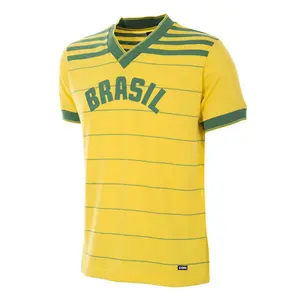
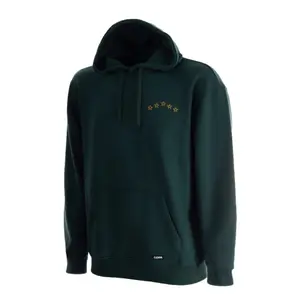
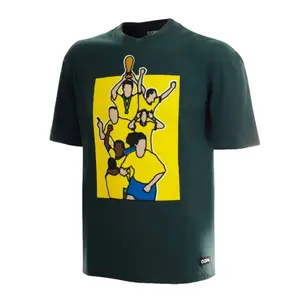
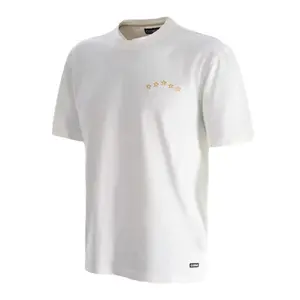
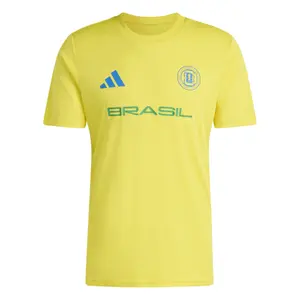
The Brazil jersey, yellow with a green collar, was born from a competition launched after the 1950 defeat at Maracanã. Choose the home yellow jersey or the away blue jersey, in supporter or authentic versions, in adult or children's sizes, the jackets and training kits of the Seleção, or the retro Copa and Legends pieces.
Five stars and the most famous yellow in football.
From white to yellow: the birth of the Brazilian jersey
Until 1950, Brazil played in white. After the defeat against Uruguay in the decisive match of their own World Cup at the Maracanã, the newspaper Correio da Manhã launched a competition to design a new jersey featuring the four colours of the flag. The winner, Aldyr Garcia Schlee, 19, came up with a yellow jersey with green collar and trims, blue shorts, and white socks.
Chosen in 1953, the kit was worn for the first time in 1954. Yellow has become the emblem of Brazilian football, and blue has since served as the colour for the away jersey.
The other nations in football
To compare the Seleção to its major rivals, the Nations page brings together all the national teams. Argentina, a neighbour and long-time rival, has its own dedicated page, as does Germany, defeated by Brazil in the final in 2002. France, the opponent in the 1998 final, Spain, and England group the jerseys of the other World Cup champion teams.
Five stars, from Pelé to the 2002 title
Brazil is the most successful country in World Cup history with five titles: 1958 and 1962, featuring a young Pelé, 1970 in Mexico, 1994 in the United States, and 2002 in South Korea and Japan. It is also the only nation to have contested all the final phases of the competition and the first to have sewn stars onto its jersey in 1974.
The last title was won 2-0 against Germany in the final in Yokohama. In 2014, the country hosted the World Cup for the second time, sixty-four years after the 1950 tournament that gave birth to the yellow jersey.
Home, away, authentic: the official range of the Seleção
The partnership between the Brazilian federation and Nike dates back to 1996. The home jersey in yellow and the away jersey in blue are available in a supporter version, with a straight and comfortable fit, and in authentic version, identical to that of the players, which is lighter and more fitted. Children have their home and away jerseys in junior sizes, and the pre-match jersey, worn during warm-ups, is available in adult and child sizes.
For training, the Strike line includes jerseys, tops, and training pants, while the tracksuits KMC and Academy Pro, with matching pants, dress the supporters before kick-off. A tank top in the team's colours completes the range for hot weather.
Finding a Seleção jersey at the right time
The yellow of Brazil is always a delight, and some times are better suited for it. Black Friday and the end-of-year holidays kick off the gift-giving season, followed by the winter sales putting Brazilian pieces in the Promotions. The French Days in spring precede the summer sales and the return to training, when the models from previous years join the Clearance section. Everything is prepared and shipped within 24 hours.
Retro jerseys Copa, Legends, and t-shirts from Brazil's great moments
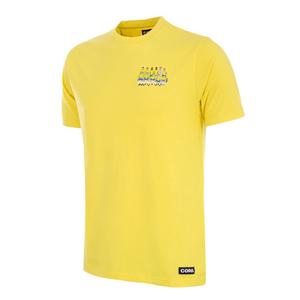
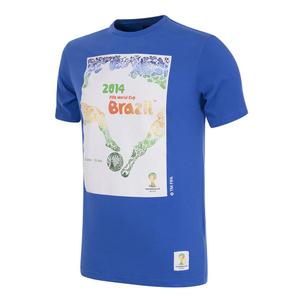
The Amsterdam-based brand Copa Football, a specialist in reissues since 1998, offers a jersey for Brazil inspired by 1984, the time when Zico and Sócrates enchanted the world with their attacking play. The embroidered World Champions 2002 t-shirt celebrates the last world title, and the t-shirt featuring the poster from the 2014 World Cup recalls the tournament held in Brazil.
The Legends line pays tribute to the golden generations with a classic t-shirt, an embroidered t-shirt, and a hoodie, understated pieces to wear daily, away from the stadiums like on match nights.
Frequently asked questions
Why does Brazil play in blue away?
Blue reflects the globe from the Brazilian flag. In the 1958 final against Sweden, which also wore yellow, the Seleção wore blue and won their first world title, making this colour a lucky charm.
What does Seleção mean, the nickname for the Brazil team?
Seleção simply means selection in Portuguese. Brazilians also call it Canarinha, the little canary, referring to the yellow adopted in the 1950s, which made the team one of the most recognisable in the world.
What size of Brazil jersey should be chosen for a child?
Trust the child's height in centimeters, as indicated in the size guide, rather than their age. If between sizes, take the larger one: the jersey will last a season longer.
Can the Brazil jersey be personalised?
Yes, the back of the home or away jersey can feature a name and a number, either that of a player or your own. Choose a print that matches the kit, as the lettering colour is not the same on yellow and blue.
How can the yellow of a Brazil jersey be kept bright?
Wash it inside out, at 30 degrees, with only light colours, as yellow easily absorbs the shades of dark textiles. Dry it in the shade: too strong a sun eventually fades the colour.