
Football boots Mizuno Morelia
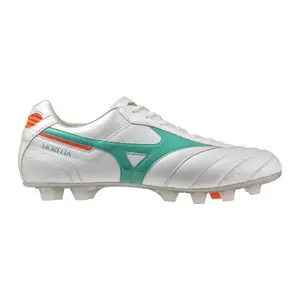
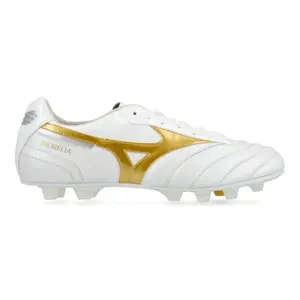

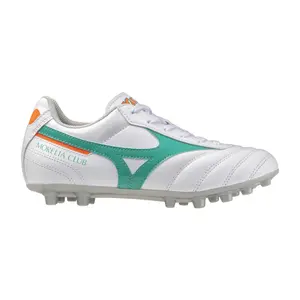
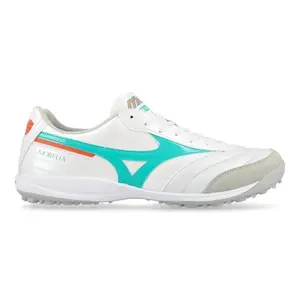

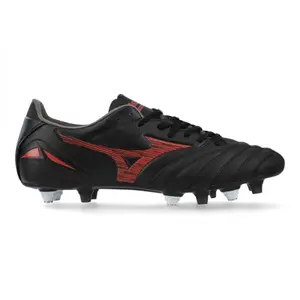


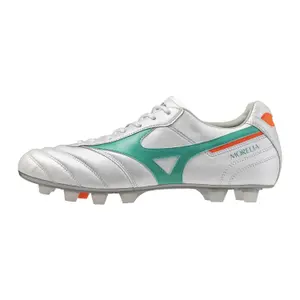
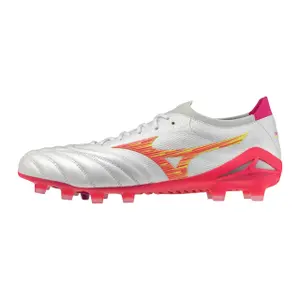


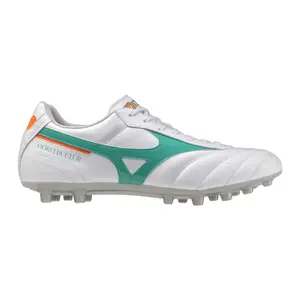


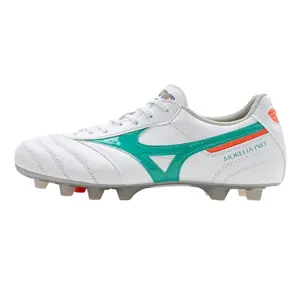

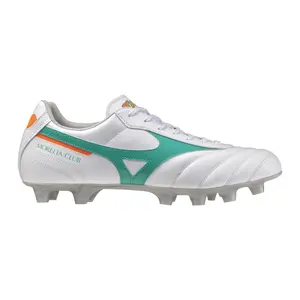

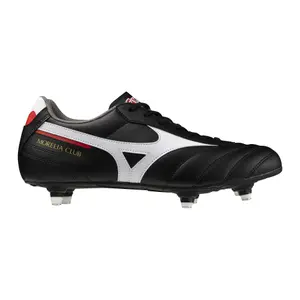


Released in 1985 after two years of prototypes tested in Brazil, the Mizuno Morelia is the shoe that established the brand's reputation in football. Its principle hasn't changed: soft and fine leather, a shape that hugs the foot, and a ball touch that its loyal fans consider unmatched.
The leather icon of Mizuno
From Morelia in Mexico to the pitches of Brazil
The development of Morelia began in 1983, when Mizuno created multiple prototypes in Brazil with Musashi Mizushima, who was then a player for São Paulo. The shoe was released in 1985 and took its name from the Mexican city of Morelia, linked to the 1986 World Cup. The Brazilian forward Careca wore it and praised its feel, and during the World Cup in 1990, seven starters from the Seleção wore it. In 2025, Mizuno celebrated its fortieth anniversary with a ruby red colourway, reminiscent of the very first edition.
The neighbouring ranges of Morelia from Mizuno
To keep the kangaroo leather while gaining in lightness, the Morelia Neo is the modern cousin of the Morelia. Sprinters will look towards the Alpha, while those with wide feet will prefer the Monarcida, built on a more generous last. All of the brand's families can be found on the Mizuno page.
Morelia II Japan, Elite, Pro and Club: the differences
The Morelia II Japan is assembled in Japan and is aimed at players looking for the most authentic version of the original spirit. The Elite shares this level of materials for competitive use. The Pro offers a quality upper with a slightly simpler sole, while the Club, more accessible, maintains the same Engineered Fit Last shape as the high-end versions: you therefore get the Morelia fit from the very first level of the range. The children’s models take this base in junior sizes, with a practical AG sole suitable for synthetic surfaces.
The Morelia for indoor and on artificial surfaces
The lineage doesn't stop with the studs. The Morelia Sala translates the fit of the Morelia II to futsal: the Elite IN version, made from kangaroo leather, rests on a shape designed for indoor play and features a flat sole that grips the floor. The TF versions, with small rubber studs, are suited for artificial pitches, city stadiums, and hard synthetics. For five-a-side football as well as training on hard surfaces, it’s a way to maintain the Morelia feel without studs, with a sole that spares the back and knees.
Giving a Morelia at the right time
A leather Morelia is a gift that makes an impression on a player, and both Black Friday and the festive season often see colourways featured on the Promotions page. The winter sales and the spring French Days take over, followed by the summer sales. Before training resumes, the Clearance lets you grab a Morelia II or a Sala in a previous colourway.
Frequently asked questions
Why do technical midfielders love the Morelia so much?
Its fine leather upper allows you to feel the ball almost like being barefoot, which helps with controlled touches and short passes. Its fit hugs the foot without any hard points, an advantage for a player who often handles the ball.
How do you take care of a Morelia leather?
After each match, remove dirt with a dry brush and then wipe with a damp cloth. Once the shoe is dry, apply a thin layer of leather cream or grease to nourish the leather and prevent it from cracking.
Does the Morelia run large or small?
Mizuno recommends considering going half a size up from your usual size on its fitted shoes. The leather will slightly stretch afterward: try them on at the end of the day to decide if you're torn between two sizes.
Can you wear a Morelia on artificial turf?
Yes, by choosing the right sole: the Morelia II comes in AG, with short and numerous studs. An FG/AG version is suitable if you alternate between grass and synthetic, but avoid wearing a pure FG on synthetic every week.
Does a leather Morelia stand up to wet fields?
Yes, the SG version with screw-in studs is made for muddy pitches. The leather absorbs some water: let it dry slowly, away from direct heat, then nourish it to keep it supple.