
Goalkeeper shirts for kids


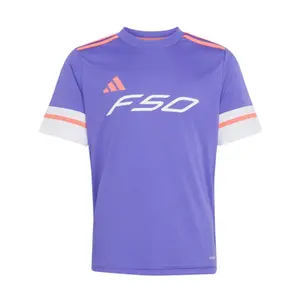
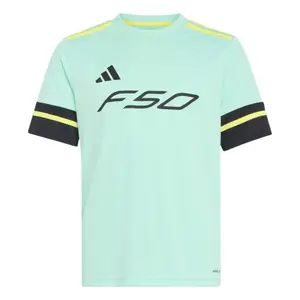
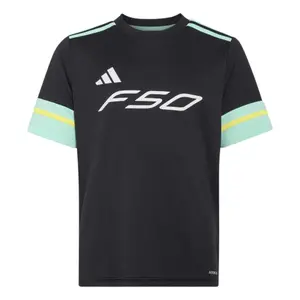
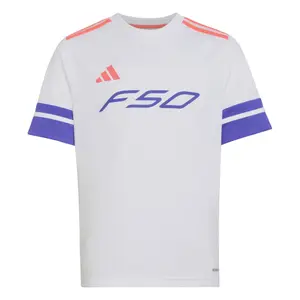
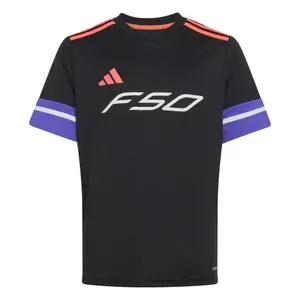


The goalkeeper jersey is nothing like a player’s jersey: long sleeves, elbow protection, and a colour that stands out from both teams. Our children's goalkeeper jerseys bring together the Uhlsport Prediction and Progressive models, the Macron Corvus Eco, Kappa, and the revisions Hummel of the Denmark jerseys.
The top that protects every dive.
Long or short sleeves: the choice depending on age and pitch
The long sleeve remains the standard for a young goalkeeper. It covers the forearm and elbow, both areas that rub against the ground with every lateral dive, and it keeps warmth during long minutes without any action. The Uhlsport Progressive and the Macron Corvus Eco in long sleeves follow this logic.
Short sleeves, as found on some Uhlsport Prediction shirts, are justified in summer or on soft grass. In this case, an undershirt in the same colour as the sleeves protects the skin without breaking the rules. For a child discovering the position, start with the long model: it provides reassurance when diving.
Matching the jersey with the rest of the goalkeeper outfit
The jersey never works alone. Goalkeeper shorts and trousers complete the bottom depending on the season, while goalkeeper baselayers are worn underneath when it's cold. For a matching top and bottom in one go, goalkeeper kits save time, and goalkeeper pads reinforce knees and elbows. All the gear can be found in the children's goalkeeper equipment, and larger sizes shift towards adult goalkeeper jerseys.
Padded elbows and technical fabrics: what sets a real goalkeeper jersey apart
On synthetic surfaces, the elbow takes the brunt of the impacts. The Uhlsport Prediction junior incorporates padded elbow protectors directly into the sleeve, and the Bionikframe long sleeve jersey from Uhlsport belongs to the brand's protective clothing line, designed to cushion impacts.
The fabric is as important as the protection. The Macron Corvus Eco is made from fully recycled PET polyester, with a back in Eco-Micromesh that allows air to circulate when the child sweats. The Kappa4soccer goalkeeper jersey, on the other hand, is part of the club equipment line from the Turin brand. In all cases, look for a fabric that dries quickly: a soggy jersey weighs down the arms.
From retro Denmark jerseys to fluorescent colours
The goalkeeper jersey is also about style. Hummel has released child versions of the Danish goalkeeper jerseys, with striking graphics: the one from Euro 1992, won by the Danes in Sweden, and the one from the 1986 World Cup in Mexico, when the Danish team already wore the bumblebee logo. Perfect for inspiring a young keeper who dreams of legendary years.
Bright colours also have a regulatory reason: the goalkeeper must wear colours that distinguish them from other players and referees. Fluorescent yellow, orange, green, or pink are easily spotted from afar, allowing the child to play with both teams, regardless of the opposing colour.
Giving a new goalkeeper jersey at the right time
The jersey is often the first piece to wear out, with frayed elbows by the end of the season. Black Friday and the holiday season are opportunities to surprise a young goalkeeper, especially with a retro model, and the winter sales come when long sleeves are most needed. Children's promotions run throughout the year, with French Days for kids in spring ahead of tournaments, followed by summer sales and the return to training. Older colours go on clearance, and the jersey is prepared and shipped within 24 hours.
Frequently asked questions
What size goalkeeper jersey should I choose for a 10-year-old child?
Start from their height rather than their age: a 10-year-old usually measures around 140 centimetres, which corresponds to size 140. The jersey should allow the arm to stretch above the head without riding up on the stomach.
Can my child wear their club goalkeeper jersey and another for training?
Yes, and it’s even recommended: a second jersey prevents wear on the match one and ensures there’s always a dry one. For training, a different colour than that of the teammates is enough.
Are integrated elbow pads sufficient on synthetic surfaces?
For most children, yes: they prevent burns and cushion impacts. A goalkeeper who dives a lot on hard ground may choose to add separate elbow pads under a non-padded jersey.
Can a number be printed on a children's goalkeeper jersey?
Yes, a number or name print holds up very well on the polyester of these jerseys. Number 1 remains the classic for the position, but there's nothing preventing a child from choosing their own.
Why do goalkeeper jerseys often have busy graphics?
A colourful and contrasting outfit catches the eye of the attacker and creates the impression of a larger goalkeeper in their goal. It’s also a tradition: goalkeepers in the 1980s and 1990s already wore very graphic patterns.