
Children's goalkeeper gloves adidas
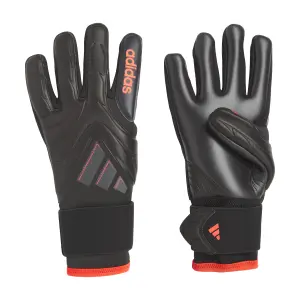
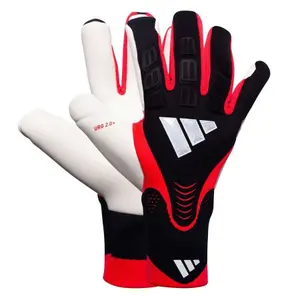

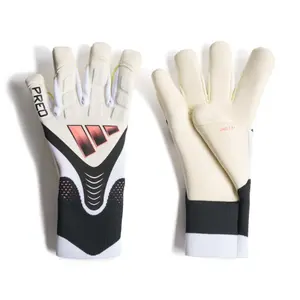
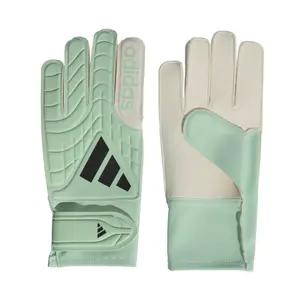
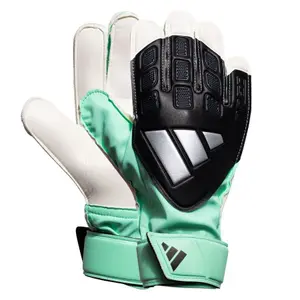
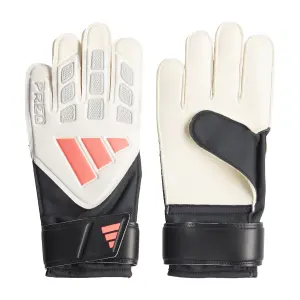


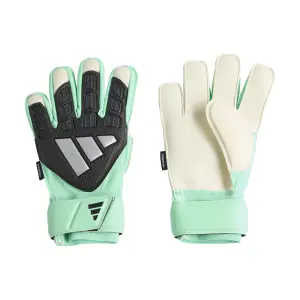


The children's goalkeeper gloves adidas feature the two families of the brand with three stripes: Predator, which offers a tight fit and grippy latex, and Copa, which is softer and more comfortable. From the Club model for beginners to the Pro version tailored like the adult ones, each level comes in junior size, with or without Fingersave spines.
Predator or Copa, it's up to you to choose your style.
Predator or Copa: two philosophies of gloves at adidas
The Predator family shares its name with the famous range of boots launched by adidas in 1994 and aims for maximum control: a snug wrist, a close fit around the fingers, and highly adhesive latex. The Copa line focuses more on comfort and ball feel, with softer gloves from the first use. A young goalkeeper who likes to feel the glove tight around their wrist and fingers will opt for Predator; while someone looking for a glove that’s pleasant to wear for the entire session will find their match with Copa. Both families come in several levels, from the most basic to the most technical.
Other junior brands and the adult adidas range
To compare with other manufacturers, the Children's goalkeeper gloves page gathers all the junior gloves, sorted by cut, latex, and size. Each brand also has its own children’s selection: Reusch and its Attrakt range, Uhlsport with its many foams, Rinat and its cuts born in Mexico, T1TAN and its barrette versions. When your goalkeeper's hand exceeds junior sizes, the models on the adidas adult page continue with the same Predator and Copa families, from the Club model to the Pro.
From the Club model to the Pro: what level adidas for your child
The adidas ranges follow a clear scale. The Club and TRN models, designed for initiation and training, feature a spacious positive cut and durable Soft Grip latex. The Match level tightens the fit and moves to a catchier Soft Grip Pro latex, suitable for a child playing a match every weekend. At the very top, the Predator Pro and the junior Copa Pro feature the brand's URG latex, made to grip on all surfaces and in all weather, and a tight negative cut around each finger, complete with a strap that wraps around the entire wrist.
Fingersave: the adidas bars for junior fingers
The Fingersave versions, like the Predator Match or the Copa Match Fingersave, incorporate flexible stays in the back of the fingers. They bend forward to close the hand around the ball but resist when bent back, preventing the typical injury for a child pushing away a close-range shot. They add a bit of stiffening: a young goalkeeper used to a classic glove may need a few sessions to get accustomed. To maintain the palm, rinse it with lukewarm water without harsh soap, press it without twisting, and let it dry flat, away from the sun: adidas latex will keep its grip much longer this way.
Junior adidas gloves at the best times of the year
The colours of adidas change with each new pack, making previous ones more accessible. Black Friday and the end-of-year holidays are the perfect time to slip a pair of Predators under the tree, while keeping an eye on children's promotions. After the winter sales, the French Days for kids in spring, followed by the summer sales and the resumption of training sessions, allow for the replacement of worn-out pairs; older Copa and Predator packs often end up in Outlet.
Frequently asked questions
Do adidas gloves run large or small?
adidas gloves follow a classic numbered sizing system, but negative cuts like the Predator Pro fit closer to the fingers than the positive cut of the Copa Club. If your child is between two sizes on a negative cut model, choose the larger one.
Is a junior Predator suitable for synthetic pitches?
Yes, but synthetic surfaces wear out softer latex faster. On this type of pitch, a training model like the Predator TRN, with a more robust palm, helps preserve the match pair, which you’ll reserve for grass games.
Why do new gloves seem to slip during the first match?
A new latex can feel a bit dry at first. Rinse the palm with clear water before the first use, then slightly dampen it before each match: the latex's grip improves when it's a bit wet.
What does the TRN label on an adidas glove mean?
TRN stands for Training version: a glove designed for training sessions, featuring a comfortable positive cut and a palm that is more durable than a match model. It’s often the ideal first pair for a child discovering the position.
Do junior adidas gloves have a wrist closure?
Yes, all close with a Velcro strap, half-turn on the training versions and more wrap-around on the high-end models. It adjusts easily without help, so the child doesn’t have to wait for an adult before kick-off.